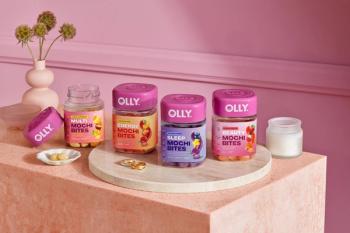

A new gummy portfolio from ingredient and delivery-format supplier SIRIO Europe illustrates how quickly creatine is being repositioned for general wellness consumers.
Creatine continues to see double digit growth as more consumers discover and take creatine. Predominantly used in pre-workout for sports nutrition, creatine is also seeing new life as an ingredient that supports cognitive health, further contributing to its growth.
Creatine is an ingredient that continues to grow. According to SPINS data for the 52 weeks ending October 6, 2024, creatine saw 46.5% sales growth in the performance category of the mainstream multioutlet channel (MULO). That double digit growth continued into 2025. SPINS data from the 52 weeks ending November 30, 2025 show that creatine saw 71.9% sales growth MULO performance category as well as 48.9% sales growth in the energy support category of the natural channel.
When Nutritional Outlook highlighted creatine in its 2023 Ingredients to Watch, the conversation revolved around how the demographics around who bought creatine, and why, were changing. This still appears to be the case. As Scott Dicker, senior director of market insights for SPINS puts it, creatine has a strong tailwind.
“So, it’s new demographics, that’s the biggest one; both age brackets, as well as women getting involved in it really expanded the pool. There are also new use cases,” he explains. “It’s not just for young men in the gym anymore. We’re seeing a lot of boost for cognitive support as well. You’re seeing an emergence of new delivery formats, whether that’s ready-to-drink or gummies or chewables. These are all big tailwinds.”
Justin Moore, senior brand manager, private brands at The Vitamin Shoppe (Secaucus, NJ) agrees, saying that creatine’s shift to overall health is driven mainly by new research indicating its benefits for cognitive health and longevity. “Most consumers are supplementing creatine for strength and size as they historically have, however this new wellness consumer, while small in comparison, is driving incremental sales in the category,” says Moore.
Research on creatine’s cognitive health benefits is promising. A recent systematic review1 and meta-analysis published in Frontiers in Nutrition found that across 16 randomized controlled studies involving 492 participants between the ages of 20 and 76, creatine monohydrate supplementation had significant positive effects on memory, attention time, and significantly improved processing speed time. According to a review2 in the Journal of Psychiatry and Brain Science, supplementation with creatine has been shown to be particularly beneficial for cognitive functioning in people experience metabolic stress such as sleep deprivation, mental fatigue and even traumatic brain injury.
The emerging cognitive health benefits of creatine not only drive-up demand for the ingredient due to its use in more formulations, but the doses required for cognitive benefits surpass those of skeletal muscle health products. “For something like cognitive health, the recommended intake is about twice the recommended intake of when you’re just trying to saturate your muscles for energy, strength, and power,” explains Dicker. “Now, you’ve expanded your base, expanded the potential pool of people who are going to use this ingredient, and the people who currently use it might now take more of it. That’s why there’s such a big push as this is an ingredient that’s been really on a rocket ship for the past handful of years.”
Research2 does indicate that cognitive health benefits from creatine supplement do require higher doses and long-term dosing strategies, but more research is required to determine optimal dosing for cognitive health benefits, particularly in healthy populations.
Creatine is often combined with complementary ingredients. “We are seeing a lot more robust creatine formulas loaded with other muscle builder ingredients, along with ‘Creatine Plus’ formulas that leverage other daily health supplements (Creatine + Collagen for example),” notes Moore. However, combination products may be more difficult for products marketed for cognitive health, says Dicker.
“There’s opportunity for it to be combined with other ingredients,” he explains. “[But] I’m a little skeptical of some of those, because a lot of the other nootropic ingredients are meant for more acute usage and creatine is typically built up over time with consistent use.”
Looking at alternative formats such as gummies or soft chews for cognitive health benefits, these higher doses will also pose a challenge for formulators. There has already been controversy in this area as testing by multiple parties has shown inconsistencies between the label claims of certain creatine gummy products and what’s actually in the supplement. NOW, for example, revealed3 in March of 2024 that out of 12 creatine gummy supplements it tested, half failed to meet label claims and detected creatinine, an unwanted creatine metabolite in the failed gummies. These results additionally revealed the lack of validated testing methodologies for gummies among trusted third-party labs, and sparked a fierce debate about what constituted proper methodology and sample prep for gummy products.
More recent testing from SuppCo4 also found that while creatine powders were stable and had reliable label claims, the same was not the case for gummies. The reason for the lack of creatine in gummy products can either be dishonesty or poor quality control. Gummies that failed to meet label claims in their tests also had elevated creatinine levels which indicate that the creatine in the product had degraded, a product of heat, moisture, acidic pH, or long storage. That said, a product that passed also had elevated creatinine levels in the gummy. This just serves to demonstrate that formats like gummies are more difficult to formulate and inherently less stable than powders. No doubt innovation will continue in this area as brands strive to develop effective creatine gummies and soft chews that meet label claims and offer a high quality user experience.
Creatine has the benefit of being well-recognized by consumers and among the most researched ingredients on the market. This is an excellent foundation for the continued innovation and growth creatine is experiencing, and only encourages further progress.
References